“Sad face, happy face”
The second derivative test
Negative second derivative means concave down, a sad face, so a maximum. Positive means concave up, a happy face, so a minimum.
Mathematics, Class 11 and 12 · Gujarat Board, CBSE, GUJCET and JEE
Derivatives stop being algebra here and start answering questions: how fast, how steep, and what is the best. Maxima and minima carry the most marks, and the second derivative test settles them quickly.
15 formulas, 3 memory hooks, and the 5 mistakes that cost the most marks.
| What | Formula | Symbols and notes |
|---|---|---|
| Rate of change | dy/dx is the rate of y with respect to x | related rates chain through a common variable |
| Marginal cost | MC = dC/dx | the cost of producing one more unit |
| Approximation | f(x + Δx) ≈ f(x) + f'(x)Δx | used for small changes and errors |
| Percentage error | (Δy/y) × 100 ≈ (f'(x)Δx/y) × 100 | how an input error propagates |
| What | Formula | Symbols and notes |
|---|---|---|
| Slope of the tangent | m = dy/dx at the point | the derivative evaluated there |
| Equation of the tangent | y − y₁ = m(x − x₁) | the point-slope form |
| Slope of the normal | −1/m | perpendicular to the tangent |
| Horizontal tangent | dy/dx = 0 | and the tangent is vertical when dy/dx is undefined |
| What | Formula | Symbols and notes |
|---|---|---|
| Increasing | f'(x) > 0 on the interval | the curve rises left to right |
| Decreasing | f'(x) < 0 on the interval | the curve falls |
| Critical point | f'(x) = 0 or undefined | the only candidates for a maximum or minimum |
| First derivative test | sign of f' changes plus to minus at a maximum | minus to plus at a minimum |
| Second derivative test | f''(x) < 0 maximum, f''(x) > 0 minimum | inconclusive when f''(x) = 0 |
| Point of inflexion | f''(x) = 0 and the concavity changes | the curve switches from cup to cap |
| Absolute extrema | check the critical points and both endpoints | on a closed interval |
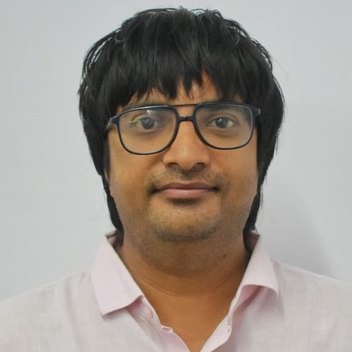
Taught by Darshit Bhatt, founder and lead faculty at Darshit Sir Institute. Instrumentation and Control engineer, with a master's degree and a chartered degree, teaching in Paldi, Ahmedabad since 2006.
Memory hooks
“Sad face, happy face”
The second derivative test
Negative second derivative means concave down, a sad face, so a maximum. Positive means concave up, a happy face, so a minimum.
“Critical first, test second”
Finding extrema
Set the first derivative to zero to find candidates, then use the second derivative or a sign change to decide which is which.
“Do not forget the ends”
Absolute maximum on a closed interval
The largest value may sit at an endpoint where the derivative is not zero at all. Always compare the endpoints too.
Where marks go
Test yourself
Ask DSI
Tell us the chapter and your class. We will tell you honestly whether our batch helps.
Related
Bring the student's last two report cards. You will get an honest read on where they stand and which batch actually helps, from the person who will do the teaching.
Get in touch
Four different ways, whichever suits you.
Enquiry
Four required fields, the rest optional. We will open WhatsApp with your details written out, ready for you to send.
Almost there
Your browser blocked the automatic hand-off, which is normal inside the Instagram and Facebook apps. Your enquiry is written and ready. Tap below to open WhatsApp and send it.
Open WhatsApp and sendIf it still will not open, save this number and message it directly: +91 98981 73421
Can we count your visit?
We use Google Analytics and Microsoft Clarity to see which pages help and which ones confuse. They set cookies. We do not run adverts and we never share this with anyone. Everything on the site works the same if you say no.